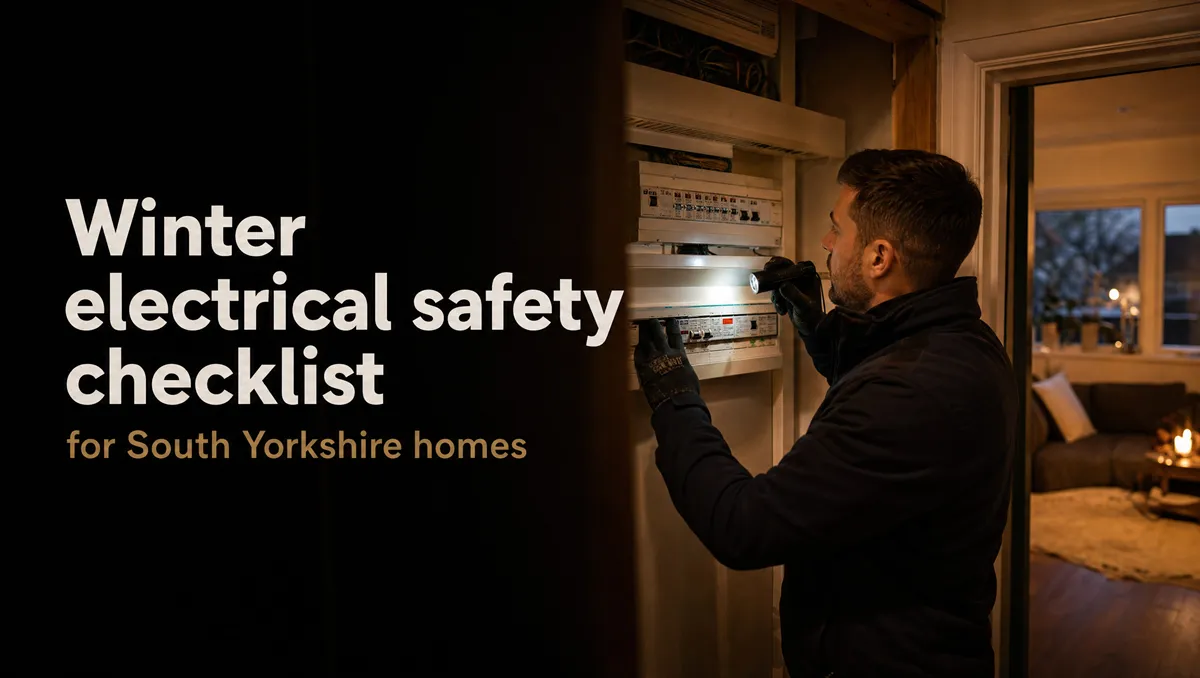

Ten checks for the cold months, from the heater in the back bedroom to the lights on the front of the house, with the local numbers worth having before a storm arrives.
Winter electrical safety comes down to a handful of checks that need no tools: test your smoke alarms, keep portable heaters off extension leads, inspect electric blankets before their first use of the season, charge e-bikes only while you are awake, and have a power cut plan in place before a storm rather than during one.
Winter is when a home asks the most of its electrics. Heaters come out of the cupboard, the tumble dryer takes over from the washing line, and lights go up outside in the wet. None of that is dangerous in itself. Much of the risk sits in how things are plugged in, left on and looked after, which is what the checks below cover.
1. Give a portable heater a wall socket of its own
Electrical Safety First advises against running a portable heater from an extension lead. A 3kW heater on its own draws roughly as much current as a 13 amp lead is built to carry, so adding anything else to the same lead pushes it past its rating.
Plug the heater straight into a wall socket and stand it on a level surface where it cannot be knocked over. Keep anything that burns, from curtains and bedding to paper and the sofa, at least a metre away, and never dry clothes on it or next to it.
Extension leads in general need more respect in winter, when more ends up plugged into them. Most are rated at 13 amps, though some older ones are 10. Use one lead per socket and never plug one lead into another.
A cable reel has to be fully unwound to carry its rated load, because a coiled reel traps its own heat. Electrical Safety First publishes a free socket overload calculator if you are unsure what a lead will take, and if the house only works on extension leads, the lasting fix is more sockets, which is routine electrical installation work.
2. Know what that heater costs to run
From 1 October to 31 December 2026, Ofgem's price cap puts the average electricity unit rate at 26.32p for a household on a standard variable tariff paying by direct debit, and the government has removed VAT from electricity bills from 1 October 2026 to 31 March 2027. Rates differ by region and payment method, and the cap is reset every three months, so your own bill has the exact figure.
The sum works for any heater. Its rating in kilowatts multiplied by the hours it runs gives the units used. A 2kW fan heater on for three hours uses 6 units, which at 26.32p is about £1.58. Every evening for a month, that comes to roughly £47.
3. Check electric blankets before the first cold night
Look the blanket and its cable over before plugging it in. Frayed or exposed wires, burn marks and signs that mice have been at it during storage all mean it goes in the bin.
Electrical Safety First recommends replacing a blanket every ten years. Never use it folded, rucked or creased, and do not use a hot water bottle while it is on. When spring comes, fold it loosely and store it somewhere cool and dry.
4. Tumble dryers doing the washing line's job
Clean the lint filter, and the fluff around the door, after every load, because that build-up can catch fire. Let a cycle finish before opening the door.
If you do have to stop it part way, take everything out quickly and leave the door open so the heat can escape. Clothes contaminated with oil, grease or solvents should not go in a tumble dryer at all.
5. Think about where e-bikes and e-scooters charge
When bikes and scooters come indoors for the winter, the hallway is the obvious place to leave them, and it is the wrong place to charge them.
Electrical Safety First's advice is never to charge a battery anywhere it could block your escape if there is a fire, which rules out hallways, landings and stairs.
Use the charger that came from the manufacturer, or a replacement from the manufacturer or approved by it. If the battery shows any damage, stop using and charging it straight away.
6. Christmas lights, inside and out
Sets that have spent years in the loft may not cope with damp winter weather, so plug them in and check them over before they go up.
Outside, only use lights marked as suitable for outdoor use with a water-drop symbol or an IP rating, keep the plugs and transformers indoors, and make sure the socket powering them has 30mA RCD protection.
Replace a failed bulb with one of the same type and rating, and never while the set is plugged in.
7. Before bed, and before you go out
The single habit that covers most of the list above is a last look round at night and on the way out of the door:
Portable heaters off. Electrical Safety First says a heater should never run unattended or while you sleep.
Tumble dryer switched off at the socket, not left to finish on its own.
Christmas lights unplugged.
Nothing left on charge, particularly e-bike and e-scooter batteries.
Electric blankets off, unless the blanket has temperature settings, automatic shut-off and overheat protection and is designed to stay on all night.
8. Buy from a proper retailer, and check for recalls
Heaters, chargers and lights from third-party sellers on online marketplaces may not have passed the safety checks that products from a reputable retailer have, and Electrical Safety First also advises against buying second-hand heaters.
Register new appliances with the manufacturer so you hear about a recall, and put anything already in the house through Electrical Safety First's free product recall checker.
9. Test the smoke alarms, and know who else can help
South Yorkshire Fire and Rescue's advice is a smoke alarm on every level of the home, tested monthly by pressing the button until it sounds.
If you rent, your landlord must provide a smoke alarm on every storey used as living accommodation, and a carbon monoxide alarm in any room with a fixed combustion appliance such as a boiler or wood burner, though gas cookers are excluded. Owner-occupiers are not bound by those rules, but the reasons for them apply to every house.
SYFR runs an online home fire safety check that anyone can use, and offers in-person visits to South Yorkshire residents at increased risk of fire, whether because of health, the home itself or habits such as smoking.
Call 0114 253 2314 to find out whether you qualify. Across Rotherham and the rest of South Yorkshire, smoke and heat alarms are something we install and test too.
10. Get ready for a power cut before the storm
Power cuts are reported free on 105. The part worth doing now is the preparation. Northern Powergrid's storm advice, reissued for Storm Goretti in January 2026, is to keep a battery or wind-up torch to hand and to turn electrical appliances off at the socket during a cut.
If anyone in the house relies on powered medical equipment, is elderly, ill or disabled, or has communication needs, join Northern Powergrid's Priority Services Membership. It is free, members get extra support and updates during a power cut, and you can register online, on 0800 169 2996, or through your energy supplier.
After a storm, stay well away from any fallen or damaged power line and report it on 105. If flood water gets into the house, do not touch switches or sockets that have been wet. Our Doncaster page explains what flood water leaves behind in an installation, and why it should be inspected and tested before the repair work is signed off.
When winter electrical safety becomes a wiring problem
Winter load exposes weaknesses that sit quietly all summer. If the board trips when the heaters and the tumble dryer are running together, our guide to finding out why your board keeps tripping walks through tracing it yourself.
Some signs are not for DIY. A smell of hot plastic or burning, brown or black scorch marks around a plug or socket, crackling, or a socket that feels warm all mean stop using it and get it looked at, rather than waiting for a quieter week. Our emergency electrician page sets out the first checks and which faults cannot wait.
Frequently asked questions
Can I use a portable heater in the bathroom?
No. The wiring regulations do not allow ordinary sockets within 2.5 metres horizontally of the bath or shower zone, which is why there is nowhere safe to plug one in, and running a heater on an extension lead from the landing brings the danger in with it. If a bathroom needs more heat, a fixed heater suitable for that location, wired in by an electrician, is the safe route.
Is it safe to plug a generator into the house during a power cut?
Not through a socket or a homemade lead. Connected that way, a generator can feed power back out along the supply cable, which endangers anyone working to repair the network as well as your own installation. If you want a generator you can use in a cut, have a proper changeover switch fitted by an electrician so the house is disconnected from the network first. Never run a portable generator indoors or in a garage, because of the carbon monoxide it produces.
Why does my smoke alarm keep chirping?
A short chirp every minute or so usually means the battery is running low, or on a mains-powered alarm that its backup battery needs attention.
Replace the battery rather than taking it out to stop the noise. If the alarm still chirps with a fresh battery, or it is past the replacement date printed on it, replace the whole unit.
Is it worth having the wiring inspected before winter?
If nobody has inspected it in the last ten years, or you have moved in since the last report, yes.
For many homes winter is when the installation works hardest, so it is the season a tired one is most likely to show it.
An inspection gives you a graded report of anything that needs attention, and our EICR cost guide explains what it involves and costs.